
The Donor Line Wants to Swallow the Spoon
Every collection has at least one case where the credit line is four times longer than the object description. The object is a 17th-century latten spoon with a nibbed stem; the tombstone below it is a miniature dynastic chronicle.
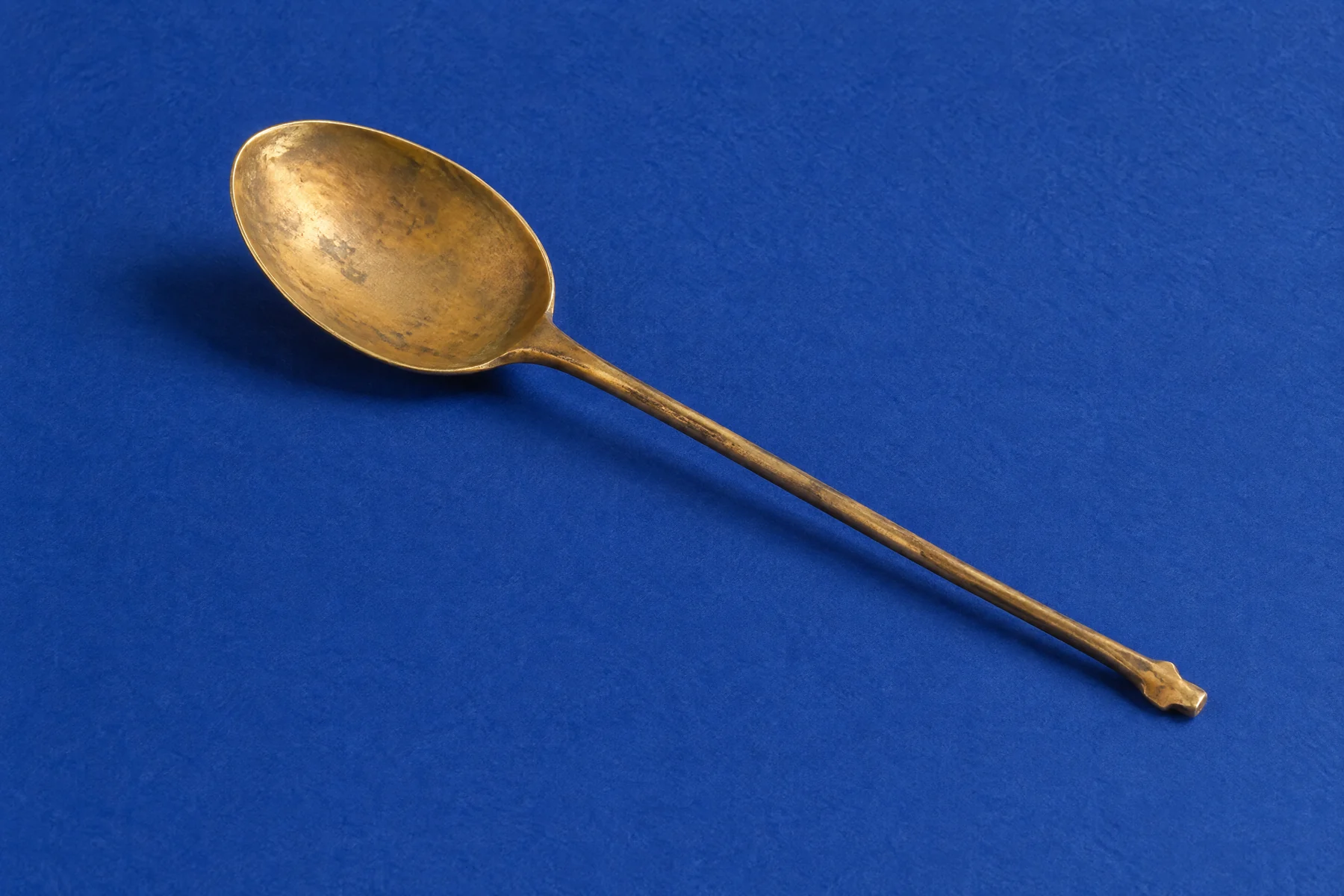
Spoon, ca. 1660. Latten (copper alloy). Purchased with funds provided by the Estate of Margaret H. and Arthur V. Lindqvist in memory of their late aunt Clara Lindqvist-Bauer, through the Friends of the Decorative Arts Council, 1988.142.09b.
By the time a visitor reaches the end of that block, they have forgotten why they looked at the spoon in the first place. They know who paid for the spoon, whose aunt is being remembered, which committee signed the paperwork, and which shelf folder holds the receipt—and nothing yet about the worn bowl or the touchmark struck into the handle.
Legal and institutional obligations are real. Usually the credit wording is fixed by a deed of gift and cannot be edited by a single syllable. What can be edited is where it sits and how much visual air it gets:
- Let the object name, date, material, and interpretive caption come first so the visitor meets the thing before the transaction.
- Drop the credit line and accession number to the bottom of the label, separated by a quiet beat of space.
- Group identical credit lines on a shared case rail when twelve objects come from the same bequest, rather than repeating a thirty-word paragraph twelve times in a row.
Generosity deserves to be recorded. It just does not need to stand in front of the spoon.